Equipment guides
Excavator Size Guide: Matching the Machine to the Job
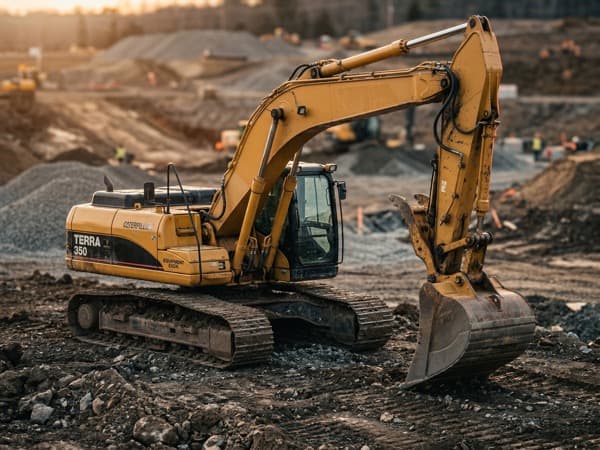
Excavators run from under a tonne to a hundred. Choosing the right class is about dig depth, site access and transport as much as raw power. Here is how to size one.
Excavators span an enormous range, from sub-tonne micro machines that fit through a doorway to 100-tonne giants in quarries. The right size is the smallest machine that meets your dig depth and reach, fits your site access, and suits your transport — in practice a 1-8 tonne mini or midi for tight or residential work, an 8-20 tonne machine for trenching, utilities and general construction, and 20 tonnes and up for bulk earthworks. Choosing well is less about horsepower than about those three practical limits, and once you fix them the size almost picks itself.
Start with dig depth and reach
The first question is geometry. How deep do you need to dig, and how far do you need to reach from where the machine can stand? Every excavator has a maximum dig depth and reach at ground level. Undersize it and you cannot complete the work; oversize it and you pay for capability you never use and may not fit on site.
List the deepest and furthest tasks first. They set the floor for machine size.
Then check access and ground
A machine that can do the work is useless if it cannot get to it. Width through gates and between structures, headroom, and the ground's ability to carry the weight all matter. On finished surfaces or soft ground, a lighter machine or rubber tracks limit damage.
This is where the mini and midi classes earn their place: a 1.5-tonne machine reaches places a 20-tonne machine never will.
Transport is part of the decision
How you get the excavator to site shapes the practical choice. Smaller machines travel on a trailer behind a pickup; larger ones need a low-loader and possibly permits. Frequent moves between sites favour a size your existing transport can handle without extra cost.
The size classes in practice
| Class | Weight | Typical work |
|---|---|---|
| Mini | Under ~6 t | Tight access, landscaping, small trenches |
| Midi | ~6-10 t | Utilities, drainage, light construction |
| Standard | ~10-40 t | General earthworks, foundations, roads |
| Large | 40 t+ | Quarrying, major civils, bulk dig |
Rent the size you need, when you need it
Few contractors need the same excavator every week of the year. The common pattern is to own one or two workhorse sizes and rent the rest as the job demands — a mini for a tight extension, a 30-tonne machine for a bulk dig. Renting avoids owning a fleet that sits idle and lets you match the exact machine to each task.
For the cost trade-off between renting, leasing and owning, see rent, lease or finance equipment, and compare your own figures in the rent vs lease vs buy calculator.
Frequently asked questions
- What size excavator do I need?
- Work backwards from three constraints: the depth and reach you need to dig, how the machine gets onto and around the site, and how you will transport it. For most residential and tight-access work a 1-8 tonne mini or midi excavator is enough; trenching, utilities and general construction usually need a 8-20 tonne machine; bulk earthworks call for 20 tonnes and up.
- What is the difference between a mini, midi and standard excavator?
- Mini excavators are under roughly 6 tonnes and prized for access and low ground damage. Midi machines run about 6-10 tonnes and balance reach with manoeuvrability. Standard excavators of 10-40 tonnes handle the bulk of construction earthworks, and large machines above that are for quarrying and major civils.
- Is it better to rent or buy an excavator?
- Rent when utilisation is occasional or project-based, or when you need a size you do not own for a specific task. Owning makes sense for a core machine you run most weeks of the year. Many contractors own one or two workhorse sizes and rent the rest as jobs demand.
Sources & further reading
About the author
Equiply Editorial TeamEquipment Finance Editorial Team
The Equiply editorial team covers industrial and maritime equipment access — rental, leasing and financing — for procurement and finance leaders across Europe.
Compare your options on Equiply
Equiply brings rental, leasing and financing for industrial and maritime equipment into one place. Be first to access the marketplace.