Equipment guides
Site Dumper vs Dump Truck: Which for Your Site?
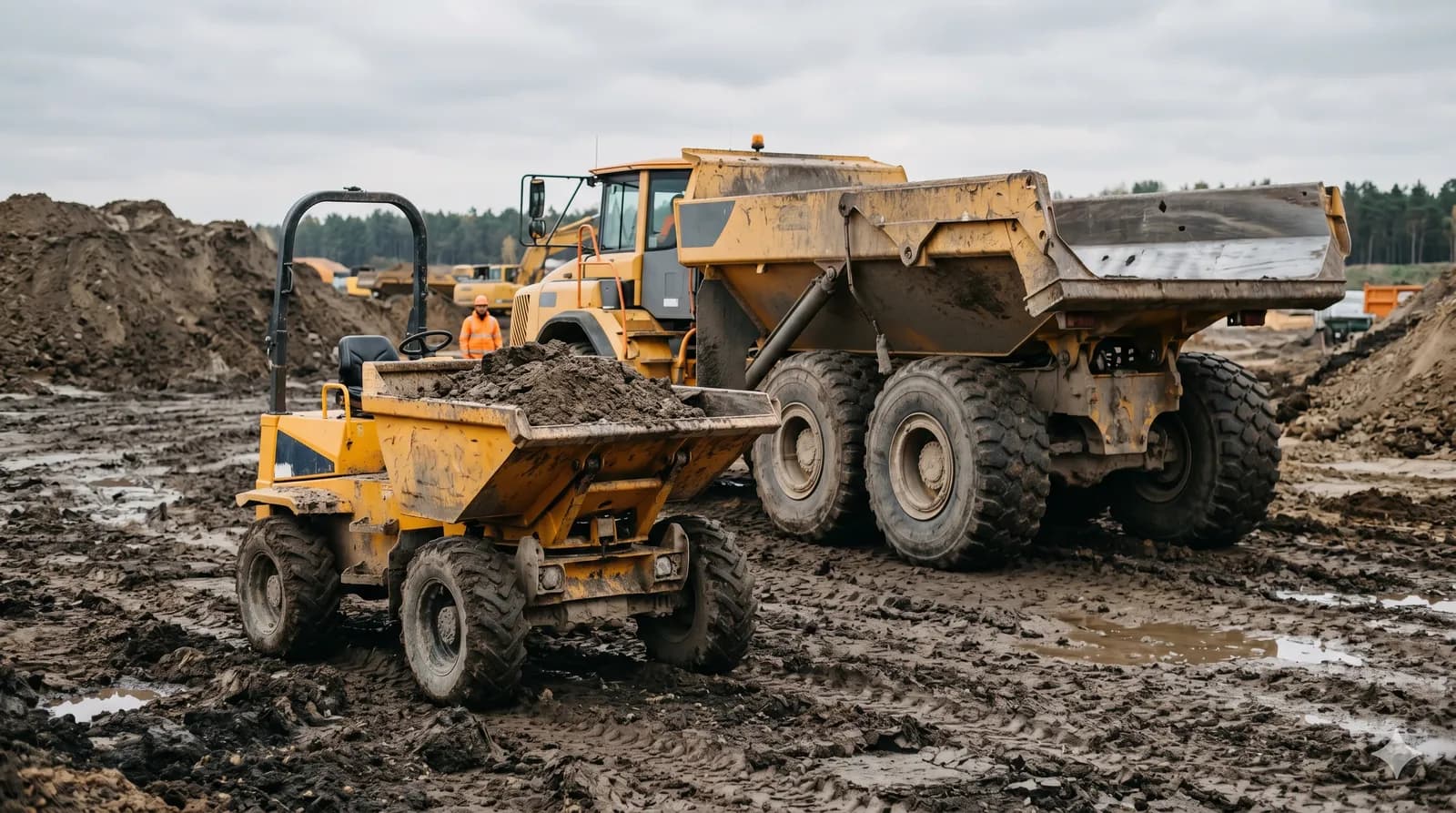
A site dumper shuttles material around tight, rough ground; a dump truck hauls bigger loads further and onto the road. Choose on payload, terrain and how far the material has to travel.
Pick a site dumper when material has to move short distances over rough or confined ground inside the site. Pick a dump truck when you need to haul larger volumes further, or onto the public road. The dumper is built for agility; the truck is built for capacity and distance. Everything else follows from those two roles.
What each machine is for
A site dumper is a compact off-road machine, typically carrying anything from one to ten tonnes. It has a skip at the front (or a swivel skip that tips to the side), articulated steering, and chunky tyres for soft or uneven ground. Its job is to take material from an excavator or loading point and shuttle it across the site — spoil, aggregate, concrete, hardcore.
A dump truck is a far larger vehicle. Rigid and articulated dump trucks used in quarries and earthworks carry tens of tonnes off-road, while road-legal tipper trucks haul material between sites and to or from the road network. The truck's strength is volume and distance, not squeezing through a tight site.
Side-by-side comparison
| Factor | Site dumper | Dump truck |
|---|---|---|
| Typical payload | 1–10 tonnes | 15–60+ tonnes (off-road), 10–30 tonnes (road tipper) |
| Terrain | Rough, soft, confined on-site ground | Haul roads, prepared tracks, public roads |
| On-road / off-road | Off-road (mostly) | Both, depending on type |
| Manoeuvrability | High — articulated, compact, tight turning | Lower — large footprint, wide turning circle |
| Travel distance | Short shuttles within the site | Long hauls, site-to-site, onto the road |
| Best for | Feeding material around a live site | Bulk earthmoving and removal off-site |
When the site dumper wins
Tight access, soft ground and short shuttle runs all favour the dumper. On a housing plot, a city-centre job or any site where space is at a premium, a small articulated dumper threads between trenches and structures a dump truck could never reach. Forward-tip and swivel-skip models place material precisely where it is needed, which matters when you are feeding concrete or backfill into a confined space.
If most of your material movement happens inside the site fence and never touches the road, the dumper is usually the right call.
When the dump truck wins
The moment volumes climb or material has to travel far, capacity decides it. Shifting large quantities of spoil off-site, supplying aggregate over distance, or working a quarry haul road all need the payload and range of a dump truck. Sending a one-tonne dumper on dozens of long runs wastes hours that a single truck load would absorb.
If material has to leave the site by road, the dumper cannot follow it — a road-legal tipper or haulage truck takes over.
Sizing the pairing
On bigger jobs the question is rarely either/or. An excavator loads a dumper, which shuttles to a stockpile or loading point, where a dump truck takes the material away. Sizing that chain so no machine waits on another is the same discipline as matching an excavator size to the work in front of it: the digger, the dumper and the truck all have to balance.
- Estimate the volume of material to move and the distance it travels.
- Match excavator bucket size to dumper payload so loading is quick.
- Size the dumper to the on-site terrain and access.
- Add a dump truck only when volume or off-site haulage demands it.
Rent the mix the job needs
Material-handling needs change job to job, which makes both machines a strong rental fit — you bring in the dumper size and, where needed, the truck the current job calls for, rather than owning fixed plant that sits idle between jobs. To compare renting against leasing or buying for your own utilisation, use the rent vs lease vs buy calculator.
Frequently asked questions
- What is the difference between a site dumper and a dump truck?
- A site dumper is a compact off-road machine, usually under 10 tonnes payload, built to shuttle material across rough and confined ground inside a site. A dump truck is a much larger vehicle, often road-legal, built to haul bigger loads over longer distances and between sites. The dumper is about agility on site; the truck is about volume and distance.
- Can a site dumper travel on public roads?
- Most site dumpers are not designed for public roads and stay within the site boundary. Some smaller models can be road-registered, but the machine is built for off-road work, not highway speeds or distances. If material has to leave the site by road, a dump truck or a haulage truck is the right tool.
- How do I choose between them?
- Match the machine to payload, terrain and travel distance. For moving spoil, aggregate or concrete short distances over rough or tight ground, a site dumper wins on agility. For larger volumes hauled over longer distances or onto the road, a dump truck wins on capacity. Many sites use both: dumpers feeding a truck at a loading point.
Sources & further reading
About the author
Equiply Editorial TeamEquipment Finance Editorial Team
The Equiply editorial team covers industrial and maritime equipment access — rental, leasing and financing — for procurement and finance leaders across Europe.
Compare your options on Equiply
Equiply brings rental, leasing and financing for industrial and maritime equipment into one place. Be first to access the marketplace.