Equipment guides
Reach Stacker vs Forklift for Container Handling
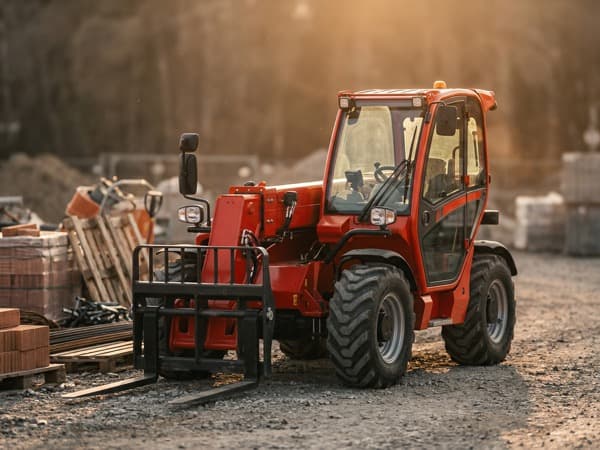
When to use a reach stacker and when a forklift handles containers better - a practical comparison for port and yard operations.
Use a reach stacker when you need to stack loaded containers several high and reach into a second row in a busy yard. Use a heavy container forklift when most moves are ground-level or single-stack, space is tight at floor level, and you want a simpler, cheaper machine. Both move containers; the difference is how high, how dense and how fast.
A standard warehouse forklift is not in this conversation. A loaded container weighs 20 to 30 tonnes, so you are choosing between a purpose-built reach stacker and a heavy-duty container-handling forklift, not the counterbalance truck that moves pallets.
What a reach stacker does best
A reach stacker carries a telescopic boom with a spreader on the end. That boom lets it lift a container, raise it high and reach over the first row to place it in the second or third. In a dense yard that means more containers in the same footprint and faster repositioning, because the operator does not have to clear a path to every box.
Reach stackers handle laden containers, stack four or five high and rotate the spreader to align loads. They are the standard for intermodal terminals and busy port yards where throughput and stacking density drive the operation.
What a heavy forklift does best
A container-handling forklift carries the load on forks or a front spreader, low and close to the machine. That gives excellent control for ground-level work, loading and unloading trailers, and handling empties. Forklifts are simpler, cheaper to buy and maintain, and easier to operate, which matters when you run multiple shifts and a deep operator pool.
The limit is reach. A forklift lifts straight up and cannot reach over a front row, so dense second-row stacking is out. For yards that mostly work at ground level or single-stack, that limit rarely bites.
Side-by-side comparison
| Factor | Reach stacker | Heavy container forklift |
|---|---|---|
| Capacity | Up to ~45 t laden containers | Up to ~45 t (top-pick); less for empties handlers |
| Stacking height | 4-5 high, reaches 2nd-3rd row | 4-5 high front row only, no reach-over |
| Container handling | Telescopic boom + rotating spreader | Forks or front spreader, fixed reach |
| Yard size | Dense, multi-row yards | Open layouts, ground-level work |
| Cost | Higher purchase and maintenance | Lower purchase and maintenance |
| Throughput | High moves per hour in tight space | Strong for direct, single-row work |
Yard layout decides more than capacity
The honest deciding factor is your yard, not the spec sheet. A deep, multi-row stacking yard rewards a reach stacker's ability to work the second and third rows without shuffling boxes. A long, open yard with mostly direct loading rewards the forklift's lower cost and simplicity.
Map your typical moves before you choose. If most containers go straight from quay to trailer or sit in single rows, the forklift's lower running cost wins. If you fight for space and stack high, the reach stacker pays for itself in throughput. This is the same buy-versus-access question we cover for waterfront operations in shipyard equipment: rent, lease or buy.
How to decide
Work through it in order:
- What do you handle — laden, empty or both? Empties favour a lighter, cheaper handler; laden across the board needs full-rated machines.
- How dense is the stacking? Second-row reach is a reach-stacker job.
- How tight is the yard? Confined, high-density yards point to the reach stacker.
- What is your volume? High throughput justifies the reach stacker's cost per move; low volume favours the forklift.
Match the financing to the duration
Container handlers are major assets, and how you pay for them should follow how long and how hard you will use them. A seasonal volume spike may suit rental; a permanent terminal role suits a lease or purchase. Run both against the full operating window with the rent vs lease vs buy calculator before you commit, so the cost per container — not the sticker price — drives the decision.
Frequently asked questions
- Can a standard forklift lift a loaded shipping container?
- Only a heavy-duty container forklift can. A standard warehouse forklift cannot handle a loaded 20ft or 40ft container, which can weigh 20 to 30 tonnes. You need either a container handler forklift with a spreader or a reach stacker rated for the load.
- How high can a reach stacker stack containers?
- Most reach stackers stack containers four or five high in the first row and can reach over the first row to place into the second or third row. Their telescopic boom is what gives them this height and reach that a forklift cannot match.
- Is a reach stacker or a forklift cheaper to run?
- A heavy forklift usually has lower purchase and maintenance costs and is simpler to operate. A reach stacker costs more but handles far more containers per hour in a dense yard, so cost per move often falls below the forklift once volumes are high.
Sources & further reading
About the author
Equiply Editorial TeamEquipment Finance Editorial Team
The Equiply editorial team covers industrial and maritime equipment access — rental, leasing and financing — for procurement and finance leaders across Europe.
Compare your options on Equiply
Equiply brings rental, leasing and financing for industrial and maritime equipment into one place. Be first to access the marketplace.