Maritime & industrial
Shipyard Equipment: Rent, Lease or Buy in a Cyclical Industry
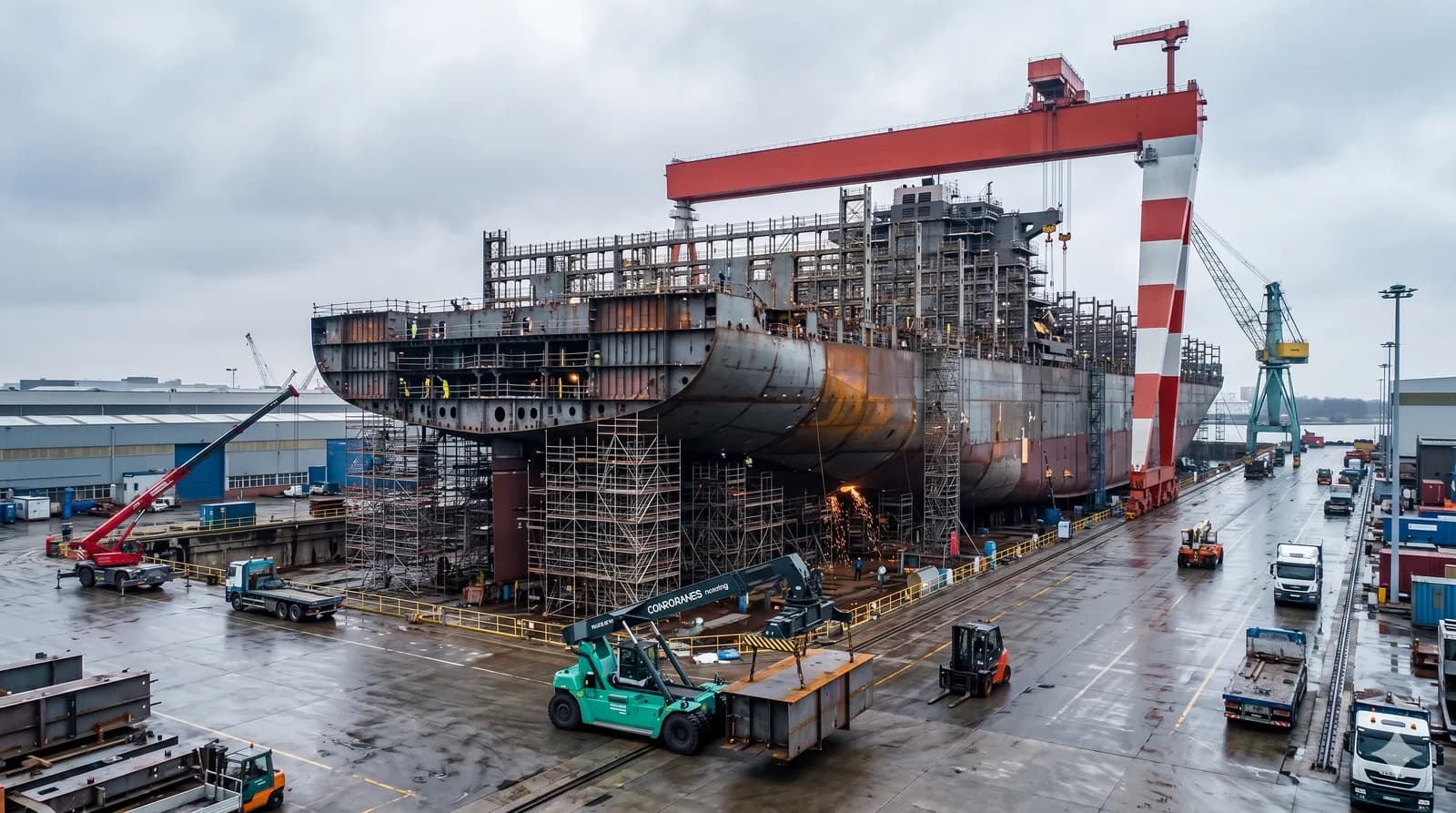
Shipbuilding demand swings hard, and decarbonisation is rewriting which equipment stays relevant. That combination changes the maths on owning heavy machines.
Few industries tie up as much capital in heavy equipment as shipbuilding and ship repair, and few face such uneven demand for it. A yard can be flat out during a major build and quiet weeks later. Two forces — cyclical workload and decarbonisation — are pushing marine businesses to rethink what they own outright.
The utilisation problem
Owning a heavy crane or a fleet of reach stackers only pays off if you use them most of the time. In a cyclical yard, that is rarely true. Equipment bought for a peak sits idle through the trough, still depreciating, still costing money to insure, certify and store.
Access models invert this. Rent or lease the machine for the build or the docking, return it when the work ends, and your equipment cost rises and falls with the workload instead of staying fixed regardless of it. That is what keeps cash flow intact through the down part of the cycle.
The decarbonisation problem
The second force is regulatory. Emissions standards and the shift toward electrified port and yard equipment are shortening how long a diesel-era machine stays useful. A crane or generator that is fully serviceable can still become commercially obsolete if it no longer meets the rules a client or port operator now imposes.
Own that machine and the obsolescence risk is yours — you are left with a depreciating asset that is hard to sell. Access it through rental or leasing and that risk sits with the supplier, who has the scale to refresh a fleet across many customers.
Where flexible access fits a yard
Some equipment is genuinely core and runs constantly, and that may justify owning it. The case for flexible access is strongest for machines whose demand peaks around specific events:
- Mobile and crawler cranes for lifts during a build or refit
- Reach stackers and heavy forklifts for handling sections and containers
- Aerial work platforms for hull and superstructure access
- Mobile generators and welding plant for project surges
- Specialised lifting gear used only on certain jobs
These peak hard and then go quiet, which is exactly the profile that suits rental over ownership.
Keeping capital where it earns
There is a balance-sheet dimension too. Capital locked into idle machines is capital not spent on the yard improvements, digital systems and capacity that win the next contract. Short-term rental also tends to stay off the balance sheet, protecting borrowing capacity for those investments.
The right mix is yard-specific. Map your equipment against utilisation and obsolescence risk, own the genuinely constant machines, and access the rest flexibly. To compare the cost of each route for a specific machine, use the rent vs lease vs buy calculator.
Frequently asked questions
- Why do shipyards increasingly rent or lease equipment?
- Shipbuilding and repair demand is cyclical, so utilisation of owned equipment swings widely. Renting and leasing convert a large fixed capital outlay into a variable cost that tracks actual workload, which protects cash flow through the troughs and frees capital for yard upgrades.
- How does decarbonisation affect equipment ownership decisions?
- Emissions rules and electrification are shortening the useful life of some diesel-era equipment faster than its accounting lifetime. Owning a machine that becomes non-compliant or obsolete leaves you holding a depreciating, hard-to-sell asset. Access models shift that obsolescence risk to the supplier.
- What equipment do shipyards typically need flexible access to?
- Mobile and crawler cranes, reach stackers and heavy forklifts, aerial work platforms, mobile generators and welding plant, and specialised lifting gear. Demand for these peaks around specific builds, dockings and refits, which makes them strong candidates for rental rather than ownership.
Sources & further reading
About the author
Equiply Editorial TeamEquipment Finance Editorial Team
The Equiply editorial team covers industrial and maritime equipment access — rental, leasing and financing — for procurement and finance leaders across Europe.
Compare your options on Equiply
Equiply brings rental, leasing and financing for industrial and maritime equipment into one place. Be first to access the marketplace.