Maritime & industrial
9 Ways to Reduce Equipment Downtime
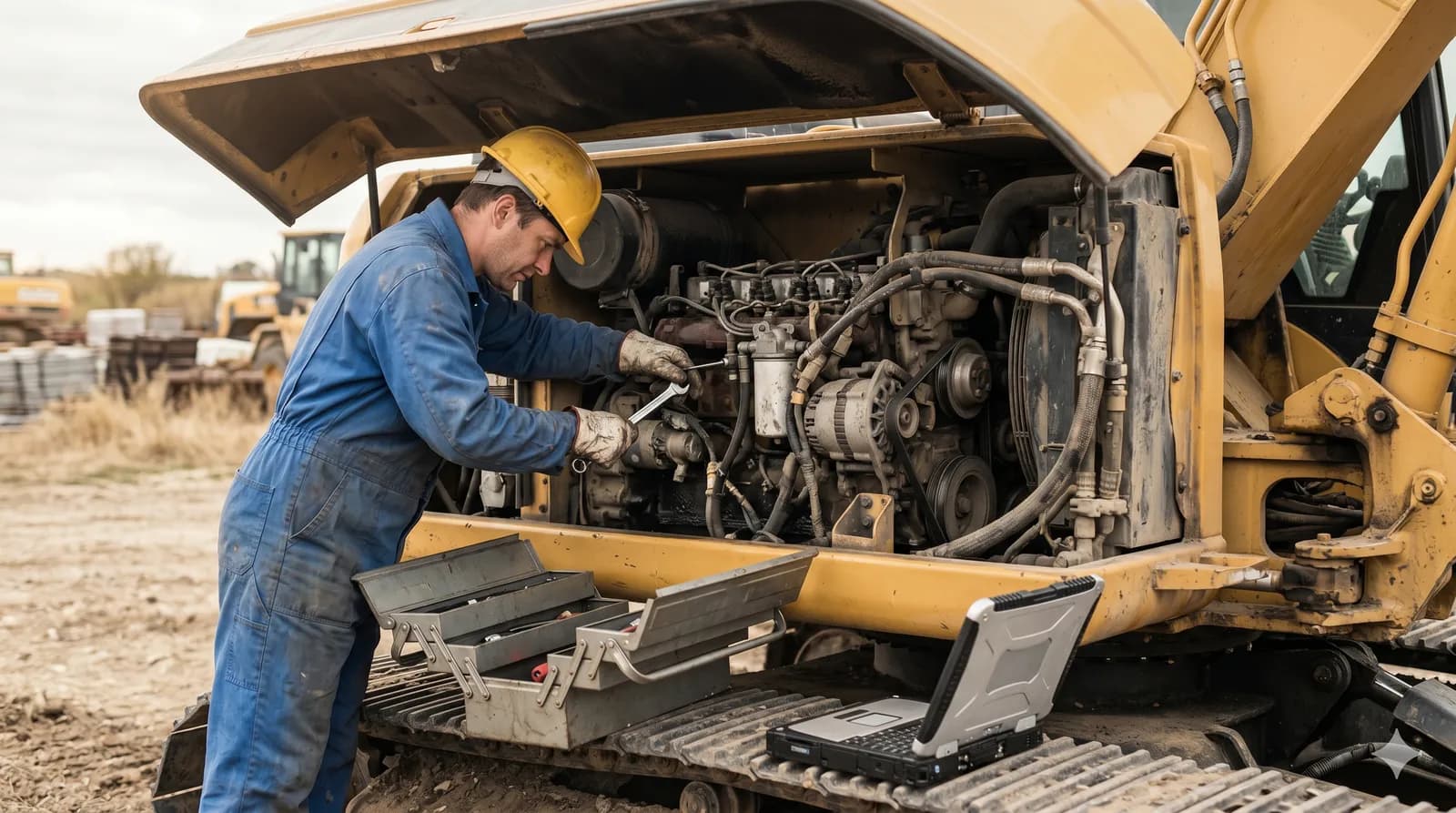
Downtime rarely has a single cause. It accumulates from missed services, untrained operators, missing parts and slow supplier response. Tackle the causes in order and availability climbs.
To reduce equipment downtime, start with scheduled preventive maintenance, make sure the data from telematics actually drives those services, and arrange a standby unit for any machine whose failure stops the whole operation. Downtime is rarely one big event; it is the sum of missed services, operator errors, missing parts and slow supplier response. Each cause is fixable, and fixing them in order of impact raises availability without large new spend. The nine tactics below work through them.
1. Run preventive maintenance on a schedule
The biggest, longest outages are usually the failures that a planned service would have caught. Service on a fixed schedule driven by operating hours, not by waiting for something to break. Planned downtime taken during a quiet window is short and controllable; unplanned downtime in the middle of a job is neither.
2. Train operators properly
A large share of breakdowns trace back to how a machine is used — over-revving, wrong attachments, ignored warning lights, rough handling. Trained operators cause fewer faults and spot problems early. Operator training is one of the cheapest interventions with the highest return on availability, and it improves safety at the same time.
3. Monitor with telematics and act on it
Telematics flag fault codes, rising temperatures and approaching service intervals before they become failures. The value lies in acting on the alerts, not collecting them. Set who owns each alert and what they do with it, so a flagged issue triggers a service rather than sitting on a dashboard until the machine stops.
4. Plan spare parts for critical machines
A machine waiting on a part is down regardless of how good your maintenance is. For critical assets, hold or pre-arrange the wear parts and consumables most likely to be needed, and know the lead time on the rest. Parts availability is often the difference between a half-day fix and a week-long outage.
5. Match the machine to the job
Running a machine outside its design envelope wears it out and breaks it down. An undersized excavator straining at a dig, or an overloaded telehandler, fails sooner. Choosing the right machine for the task reduces stress-related failures, and it ties directly to better equipment utilisation, because the right machine finishes faster and breaks less.
6. Arrange standby units via rental
For any machine whose failure halts an operation, line up a backup before you need it. Owning a spare that sits idle most of the year is expensive; renting a standby unit for the days a core machine is in repair is not. The short-term hire cost during an outage is almost always far below the cost of the stoppage it prevents.
7. Keep inspection routines tight
Daily and pre-use inspections catch the small problems — low fluids, worn hoses, loose fittings — before they escalate into failures. A short, consistent inspection routine, properly recorded, is the front line of downtime prevention and a legal requirement for much work equipment. Make it a habit, not a form-filling exercise.
8. Hold suppliers to clear SLAs
When equipment does fail, response time decides how long you are down. Agree clear service-level commitments with maintenance and rental suppliers — response windows, parts availability, replacement terms — before you sign, not during a crisis. A machine that is fixed or swapped in four hours costs you far less than one that waits three days.
9. Manage fuel, fluids and contamination
Poor fuel and fluid management quietly causes a large share of failures: contaminated diesel, degraded hydraulic oil, neglected coolant and filters. Clean storage, correct grades and disciplined filter changes prevent the slow-burn problems that take machines out of service. It is unglamorous and it works.
Where the gains come from
| Cause of downtime | Primary fix |
|---|---|
| Wear and missed service | Preventive maintenance, telematics |
| Operator-induced faults | Training, right machine for the job |
| Waiting on parts | Spare-parts planning, supplier SLAs |
| Critical machine offline | Standby unit via rental |
| Fluids and contamination | Disciplined fuel and fluid management |
Downtime is a system problem, so attack it across maintenance, operation, parts and supply rather than chasing one cause. Many of the same disciplines also lift utilisation, since a machine that does not break down is a machine that earns. To weigh the cost of a standby rental against ownership for a critical asset, use the rent vs lease vs buy calculator.
Frequently asked questions
- What is the single most effective way to reduce equipment downtime?
- Scheduled preventive maintenance. Most catastrophic, long-duration failures are preceded by warning signs or wear that a planned service would have caught. Servicing on a fixed schedule, ideally guided by operating hours and telematics data, converts unpredictable breakdowns into planned, short interventions during quiet windows.
- How can rental help reduce downtime?
- A standby or backup unit hired in covers the period while a core machine is down for repair or service, so the work continues instead of stopping. For critical machines whose failure halts a whole operation, the cost of a short-term rental during the outage is far lower than the cost of the stoppage. It is cheaper than owning a spare that sits idle most of the year.
- Do telematics actually reduce downtime?
- Yes, when the data is acted on. Telematics flag fault codes, abnormal temperatures and approaching service intervals early, so issues are addressed before they become failures. The value is not the data itself but the maintenance and operator decisions it triggers. Without a process to act on the alerts, telematics is just a dashboard.
Sources & further reading
About the author
Equiply Editorial TeamEquipment Finance Editorial Team
The Equiply editorial team covers industrial and maritime equipment access — rental, leasing and financing — for procurement and finance leaders across Europe.
Compare your options on Equiply
Equiply brings rental, leasing and financing for industrial and maritime equipment into one place. Be first to access the marketplace.