Maritime & industrial
Electric Construction Equipment: What's Available Now
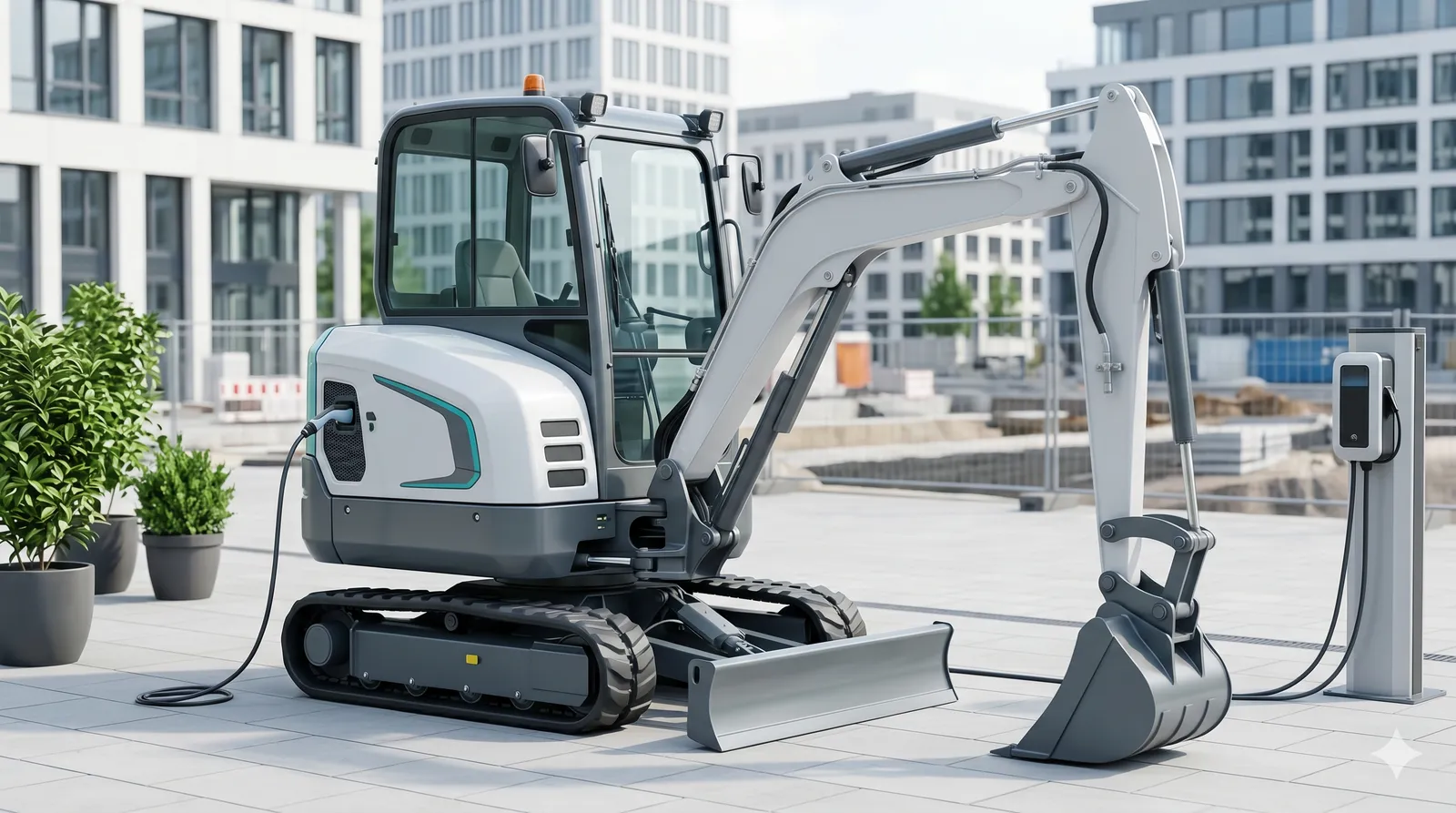
Battery-electric excavators, loaders, telehandlers and access platforms are on the market now. They cut emissions and noise and work indoors, but runtime and charging set the limits. Renting is the low-risk way to try them.
Battery-electric construction machines are no longer a concept. You can rent or buy electric excavators, compact loaders, telehandlers and aerial platforms today. They cut emissions and noise to zero at the point of use and work where diesel cannot. The constraints are runtime and charging, and those are exactly why renting is the sensible first step.
What is on the market now
Electrification has moved fastest where duty cycles are light and intermittent, because that is where current battery capacity stretches furthest.
- Compact and mid-size excavators — widely available in electric form, suited to urban, indoor and confined work.
- Compact wheel loaders — battery versions handle yard, agricultural and indoor material handling.
- Telehandlers — electric models cover indoor and lower-intensity lifting and placing.
- Aerial work platforms — scissor lifts and many boom lifts have run on batteries for years; electric is the norm indoors.
Larger earthmoving and heavy lifting machines exist in electric form but remain less common, because the energy a full shift of heavy digging needs is harder to carry in a battery.
The real benefits
The headline gain is zero exhaust emissions at the point of use. That opens up work diesel struggles with: inside buildings, in tunnels, in low-emission urban zones, and on sites near housing where fumes are a problem.
Noise is the second win and an underrated one. An electric machine is dramatically quieter, which extends the hours you can legally work near residents and makes the site safer to communicate on.
Running costs also tend to favour electric. Electricity per working hour is often cheaper than diesel, and with far fewer moving parts there is less to service and fewer fluids to change. Over a busy life that adds up, even before any emissions regulation or port electrification push.
The limits to plan around
Two constraints shape every electric deployment.
- Runtime. A battery machine that lasts a full shift on light work may need a top-up under heavy continuous load. You plan charging into the day rather than assuming a single charge covers everything.
- Charging. The site needs a power supply that can charge the machine in the window you have — usually overnight, sometimes at lunch. On a remote site without grid power, that is a real planning question.
Upfront cost is the third factor. Electric machines still carry a higher purchase price than equivalent diesel, even where lower running costs close the gap over time.
Why rental de-risks the transition
The case for renting electric is stronger than for almost any other equipment decision, because the technology and your own operations are both still finding their feet.
Renting lets you test whether an electric excavator actually completes your typical shift before you commit capital to one. It avoids buying into a fast-moving technology that may be superseded within a few years. And it sidesteps the higher purchase premium while you learn how charging fits your sites. If the machine does not suit a job, you send it back rather than owning a misjudged asset.
That is the core argument for choosing an access model deliberately — see rent, lease or finance equipment for how the three options compare. For electric specifically, short-term rental matches a transition where the right answer is still moving.
A sensible first move
- Pick one machine type where electric is mature — a compact excavator, a scissor lift, a telehandler.
- Rent it for a real job, not a trial yard, and check it completes your normal shift.
- Measure charging against your site's power supply and working hours.
- Compare the all-in hourly cost against the diesel you would otherwise run.
- Scale up only where the numbers and the duty cycle both hold.
To put renting, leasing and buying side by side for a specific electric machine and your own utilisation, use the rent vs lease vs buy calculator.
Frequently asked questions
- What electric construction equipment can I actually buy or rent today?
- Battery-electric machines are on the market across several categories: compact and mid-size excavators, compact wheel loaders, telehandlers, and aerial work platforms such as scissor and boom lifts. Compact and indoor machines are furthest along because their duty cycles suit current battery capacity. Larger earthmoving machines exist but remain less common.
- What are the main benefits of electric machines?
- Zero exhaust emissions at the point of use, far lower noise, and no local fumes, which makes them suited to indoor work, tunnels, urban sites with emission zones, and night work near housing. Running costs per hour are often lower than diesel, and there are fewer moving parts to service.
- What are the limits I should plan around?
- Runtime on a single charge and charging time are the two constraints. A machine that runs a full shift on light duty may need a midday top-up under heavy load, so you plan charging into the work and check the site has the power supply to charge it. Upfront purchase prices are also higher than equivalent diesel machines.
Sources & further reading
About the author
Equiply Editorial TeamEquipment Finance Editorial Team
The Equiply editorial team covers industrial and maritime equipment access — rental, leasing and financing — for procurement and finance leaders across Europe.
Compare your options on Equiply
Equiply brings rental, leasing and financing for industrial and maritime equipment into one place. Be first to access the marketplace.