Maritime & industrial
Port Equipment Electrification: A Decarbonisation Guide
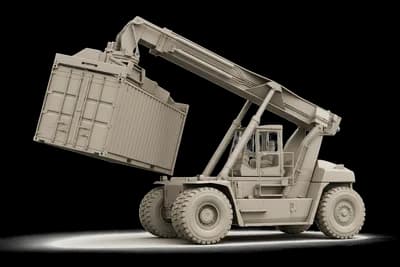
Ports are electrifying cranes, stackers and yard equipment to meet emissions rules. That shift shortens the useful life of diesel machines and changes how to own a fleet.
Ports are under pressure to cut emissions, and the equipment that moves containers around a terminal is squarely in the frame. Diesel reach stackers, yard tractors and cranes are being replaced by electric equivalents, and ships at berth are being asked to plug into shore power rather than idle their engines. For terminal operators, this is not only an environmental shift — it changes the maths on what equipment to own.
What is driving the change
Three forces push terminals toward electrification:
- Regulation. Emissions standards and local air-quality rules tighten over time, and non-compliant equipment becomes a liability.
- Customer pressure. Shipping lines and the cities that host ports increasingly expect lower-carbon operations as a condition of doing business.
- Cost and energy. Electric drivetrains have fewer moving parts and can lower running and maintenance costs once the charging infrastructure is in place.
What is being electrified first
The early targets are machines that cycle predictably and return to a base where they can charge: yard tractors and terminal trucks, reach stackers and empty-container handlers, and rubber-tyred gantry cranes. In parallel, shore power lets berthed ships switch off their auxiliary engines and draw electricity from the quay instead.
Why this favours flexible access
Here is the part that matters for fleet decisions. Electrification shortens the commercial life of diesel equipment faster than its mechanical life. A diesel reach stacker can be perfectly serviceable yet no longer welcome at a terminal that has committed to cutting emissions. Own that machine and you carry the obsolescence risk — you are left with a depreciating asset that is hard to sell.
Accessing equipment through rental or leasing moves that risk to a supplier with the scale to refresh a fleet across many customers and to offer the newer electric models as they arrive. It also lets a terminal trial electric equipment without committing capital to a technology that is still maturing.
A practical approach for terminals
- Map your equipment against both mechanical life and likely compliance life — the shorter of the two now governs.
- Treat machines with high obsolescence exposure as candidates for flexible access rather than purchase.
- Keep capital for the fixed infrastructure that electrification actually requires: charging, grid upgrades and shore power.
Short-term rental also tends to stay off the balance sheet, protecting borrowing capacity for that infrastructure. For the broader ownership trade-off, see rent, lease or finance equipment, and compare the cost of each route in the rent vs lease vs buy calculator.
Frequently asked questions
- Why are ports electrifying their equipment?
- Ports face tightening emissions rules, local air-quality obligations and pressure from shipping lines and cities to cut carbon. Electrifying yard equipment — reach stackers, terminal tractors, cranes — and providing shore power to berthed ships removes diesel emissions at the point of use and is increasingly required to keep a terminal compliant and competitive.
- How does electrification affect equipment ownership decisions?
- It shortens the commercial life of diesel-era machines. A serviceable diesel reach stacker can become non-compliant or unwelcome at a terminal before it is worn out, leaving the owner with a depreciating, hard-to-sell asset. Flexible access — rental or leasing — shifts that obsolescence risk to a supplier who refreshes the fleet across many customers.
- What port equipment is being electrified first?
- Yard tractors and terminal trucks, reach stackers and empty-container handlers, and rubber-tyred gantry cranes are common early targets because they cycle predictably and return to base to charge. Shore power, which lets ships switch off engines at berth, is rolling out in parallel.
Sources & further reading
About the author
Equiply Editorial TeamEquipment Finance Editorial Team
The Equiply editorial team covers industrial and maritime equipment access — rental, leasing and financing — for procurement and finance leaders across Europe.
Compare your options on Equiply
Equiply brings rental, leasing and financing for industrial and maritime equipment into one place. Be first to access the marketplace.