Equipment guides
Wheel Loader Sizing Guide
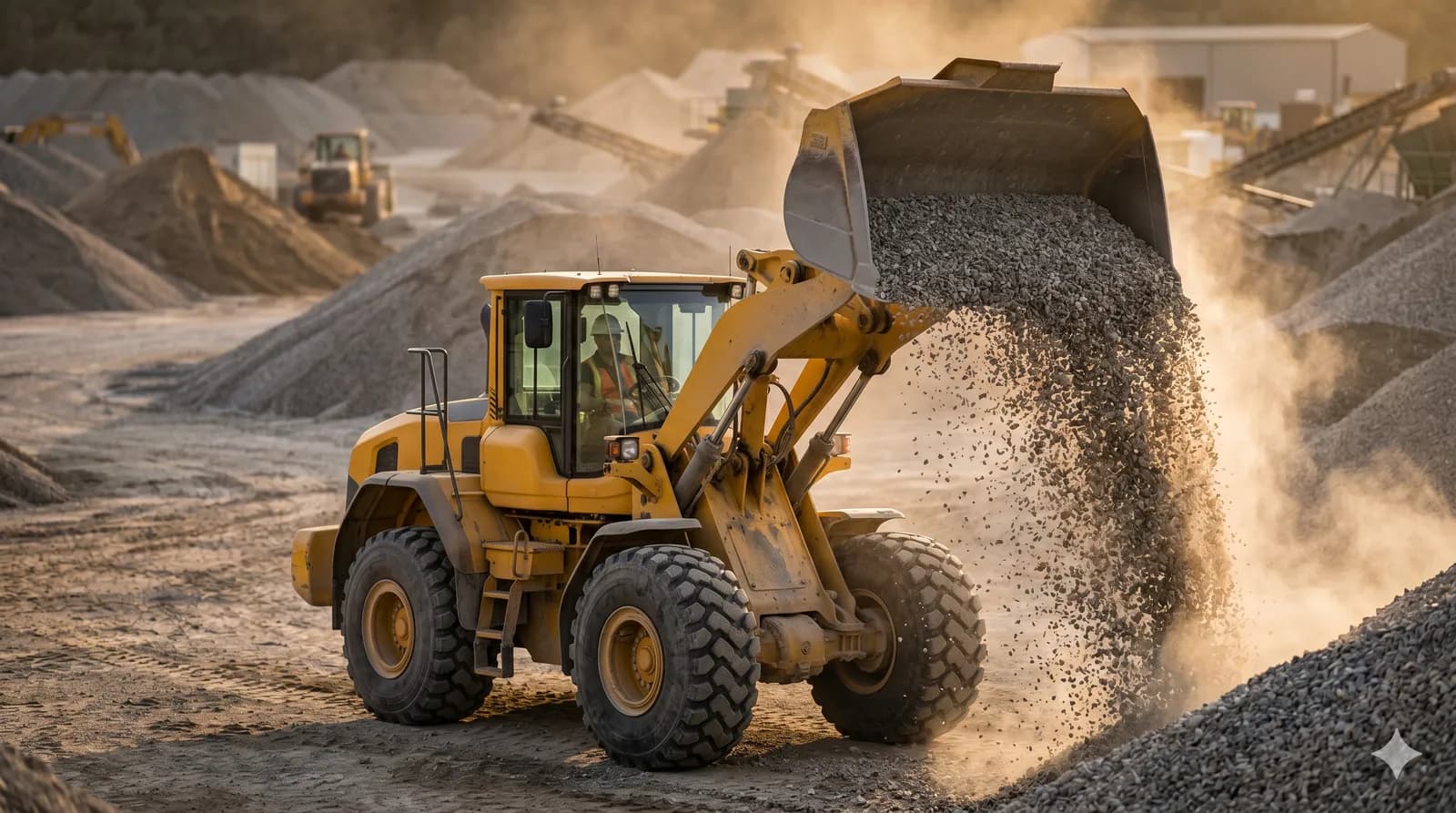
Match a wheel loader to your job using bucket capacity, weight, material density, loading height and site access.
Size a wheel loader from the work, not the price list. Pick the machine whose bucket fills your trucks in three to five passes, whose rated payload covers your heaviest material, whose dump height clears the load, and whose width and turning circle fit your tightest access. Get those four right and the size class follows.
The common mistake is sizing on bucket volume alone. A bucket that looks right by the cubic metre can overload the machine the moment it is full of wet aggregate. Volume and weight have to be checked together.
Bucket capacity: match it to the truck
Your bucket should fill the haul truck or hopper in three to five passes. Fewer passes means a bigger, costlier loader sitting idle between trucks; more passes means slower cycles and higher fuel and wear per tonne moved. Work out your target: truck payload divided by bucket payload should land in that three-to-five band for the material you actually handle.
Material density: the limit you cannot see
Bucket capacity is rated by volume, but the machine is limited by weight. Light materials — wood chip, mulch, dry sand — let you run a full or oversized bucket. Dense materials — wet aggregate, ore, compacted soil — fill the bucket to the machine's payload long before it is full by volume. Always multiply bucket volume by material density and check the result against the loader's rated payload and tipping load. If it exceeds either, you need a smaller bucket or a larger machine.
Operating weight: stability and ground impact
Operating weight tracks roughly with capacity and reach, but it also drives stability and how the machine treats your ground. A heavier loader stays planted with a full bucket but compacts soft surfaces and costs more to transport. On finished yards or sensitive ground, the lightest machine that does the job is usually the right one.
Loading height: clear the side of the truck
The loader's full dump height and dump reach must clear the side of whatever you are loading, with room for the bucket to tip out cleanly. Tall-sided tipper trucks and elevated hoppers can push you up a size class or into a high-lift arm. Check the loaded machine's dump clearance against the load target before you choose, not after the truck arrives.
Site access: width, turning and transport
A loader that is perfect for the task is useless if it cannot reach the working area. Check machine width against gateways and aisles, turning circle against the space it has to manoeuvre in, and transport weight against your float and the access road. Tight indoor or urban sites often cap the practical size below what the loading task alone would suggest.
Size-class guide
| Class | Bucket capacity | Operating weight | Typical work |
|---|---|---|---|
| Compact | 0.4-1.0 m³ | 3-7 t | Landscaping, tight yards, indoor |
| Small | 1.0-2.0 m³ | 7-12 t | General construction, light loading |
| Medium | 2.0-4.0 m³ | 12-20 t | Quarry feed, aggregate, recycling |
| Large | 4.0-7.0 m³ | 20-35 t | Heavy loading, bulk handling |
| Production | 7.0 m³+ | 35 t+ | Mines, large quarries, ports |
Treat these as starting points. Dense material, tall loading targets or tight access can all push you to a different class than the bucket figure alone implies.
Put it together
Run the four checks in order: passes to fill the truck, loaded bucket weight against rated payload, dump height against the load, and machine size against your access. Where they conflict, the tightest constraint wins — usually access or density, not the headline bucket volume. The same payload-versus-volume logic applies when you compare digging machines, covered in our excavator size guide.
Decide how to pay for it
Once you know the class, decide how to access it. A loader that runs every day for years often justifies a lease or purchase; a project peak or seasonal demand suits rental. Compare the options across your real usage window with the rent vs lease vs buy calculator so the decision rests on cost per tonne moved, not the day rate alone.
Frequently asked questions
- How do I work out the right bucket size for a wheel loader?
- Start from the material density and the truck you are loading. A light material like wood chip suits a large bucket; a dense material like wet aggregate needs a smaller bucket so the load stays within the machine's tipping limit. Aim to fill the truck in three to five passes.
- Why does material density matter when sizing a loader?
- Because a full bucket of dense material can exceed the loader's safe lifting and tipping capacity even when the bucket is the right volume. Always check the loaded bucket weight against the machine's rated payload, not just the bucket's cubic capacity.
- What loading height do I need for a wheel loader?
- The loader's dump height must clear the side of the truck or hopper you are loading, with clearance for the bucket to tip fully. Tall-sided trucks and high hoppers need a larger machine or a high-lift arm configuration.
Sources & further reading
About the author
Equiply Editorial TeamEquipment Finance Editorial Team
The Equiply editorial team covers industrial and maritime equipment access — rental, leasing and financing — for procurement and finance leaders across Europe.
Compare your options on Equiply
Equiply brings rental, leasing and financing for industrial and maritime equipment into one place. Be first to access the marketplace.