Equipment guides
Types of Cranes and What Each Is For
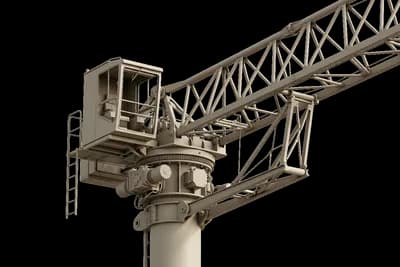
The main crane types explained in plain terms, with the job each one is built for.
The right crane is the one matched to your load weight, your reach, how long the job runs and where it sits. Below are the main types you will meet on European industrial and maritime sites, with the job each is built for. If you are weighing two specific machines, the crawler crane vs mobile crane comparison goes deeper.
1. Tower crane
The fixed steel mast you see over tall building sites. A tower crane is bolted to a base or climbs with the structure, giving huge height and a wide working radius from a small footprint. Use it when you are building upward for months and need a single crane to stay in place and serve the whole site. Our how to choose a tower crane guide covers sizing and configuration.
2. Mobile crane (all-terrain)
The workhorse. Drives to site on rubber tyres, deploys outriggers and lifts within the hour. All-terrain models combine highway speed with off-road capability, so one machine can cover several sites in a week. Use it for the bulk of everyday lifts where speed and flexibility matter more than peak capacity.
3. Crawler crane
Mounted on two wide tracks instead of wheels. It cannot use public roads and arrives in sections, but it offers the highest capacities, the longest booms and the ability to pick and carry on prepared ground. Use it for heavy, long-duration work in one location: wind farms, bridges, refineries and large structures.
4. Rough-terrain crane
A single-engine crane on four large tyres, built only for off-road site work. It is compact, manoeuvrable on rough or muddy ground and needs a trailer to move between sites. Use it on confined or undeveloped sites — pipelines, civil works, energy projects — where a road-going crane cannot get traction.
5. Truck-mounted / loader crane
A crane mounted on a standard truck chassis. Truck-mounted cranes travel fast on the road and set up quickly, trading some lifting capacity for mobility. Loader cranes (knuckle-boom) sit behind the cab to load and unload the truck's own deck. Use them for delivery lifts, plant and equipment moves, and jobs where the crane also has to haul the load.
6. Overhead / gantry crane
A bridge that runs on rails or wheels, lifting loads with a hoist that travels along it. Overhead cranes are fixed inside factories and workshops; gantry cranes stand on legs and can be fixed or mobile in a yard. Use them for repetitive indoor lifting — machining, fabrication, warehousing — where the same path is worked all day.
7. Port / ship-to-shore crane
The large fixed and rail-mounted cranes that load and unload vessels. Ship-to-shore (STS) cranes lift containers between quay and ship; rubber-tyred and rail-mounted gantry cranes stack them in the yard. Use them for high-volume, repetitive container and bulk handling at ports and terminals. Electrification is reshaping this category — see port equipment electrification.
Quick selection table
| Crane type | Mobility | Typical use |
|---|---|---|
| Tower | Fixed, climbs with build | Tall buildings, long projects |
| Mobile (all-terrain) | Drives to site | General everyday lifts |
| Crawler | Shipped in sections | Heavy, long-duration single-site |
| Rough-terrain | Trailered between sites | Confined, off-road sites |
| Truck / loader | Fast road travel | Deliveries, plant moves |
| Overhead / gantry | Fixed or yard-mobile | Repetitive indoor or yard lifting |
| Port / STS | Fixed or rail | Container and bulk handling |
How to narrow it down
Start with the heaviest load and the furthest reach, then layer in duration and access. A short job across several sites points to a mobile crane; a tall build points to a tower crane; sustained heavy lifting in one spot points to a crawler. Indoor and yard repetition points to overhead, gantry or port cranes.
Before you commit to a model, compare renting against a longer lease for the full duration with the rent vs lease vs buy calculator. For a fast-moving fleet you reuse across sites, ownership can win; for a one-off project, renting almost always does.
Frequently asked questions
- What is the most common crane on a construction site?
- Mobile cranes are the most common because they drive to site, set up in under an hour and handle the majority of everyday lifts. Tower cranes dominate tall building projects where the same crane stays in place for months.
- What is the difference between an all-terrain and a rough-terrain crane?
- An all-terrain crane is built for both highway travel and rough ground, so it can drive long distances between sites. A rough-terrain crane is designed only for off-road site work on large tyres and must be transported between sites on a trailer.
- Which crane type lifts the heaviest loads?
- Large crawler cranes lift the heaviest loads and reach the longest booms, which is why they are used for wind turbines, bridges and refinery work. Port ship-to-shore cranes also handle very heavy, repetitive container loads but are fixed structures.
Sources & further reading
About the author
Equiply Editorial TeamEquipment Finance Editorial Team
The Equiply editorial team covers industrial and maritime equipment access — rental, leasing and financing — for procurement and finance leaders across Europe.
Compare your options on Equiply
Equiply brings rental, leasing and financing for industrial and maritime equipment into one place. Be first to access the marketplace.