Equipment guides
Crawler Crane vs Mobile Crane: Which Should You Use?
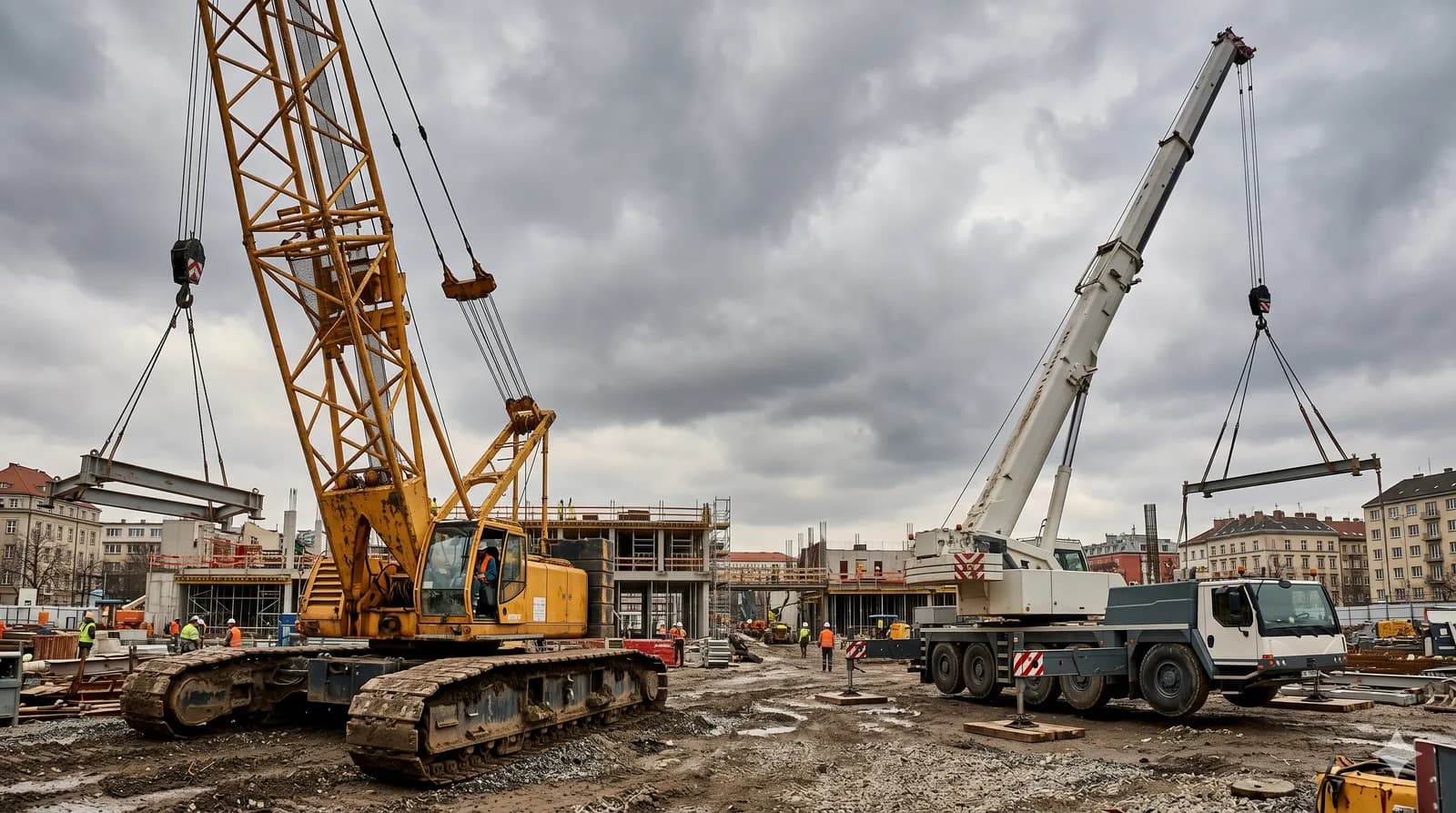
A practical comparison of crawler and mobile cranes so site and procurement leaders can match the machine to the job.
If your lift is short, scattered around town or needs to be done the same day, use a mobile crane. If it is heavy, runs for weeks and stays in one spot on prepared ground, use a crawler crane. That single trade-off — mobility versus sustained capacity — decides most jobs.
Both machines lift loads with a boom, but they move and set up in completely different ways, and that drives cost more than the headline tonnage figure.
What a crawler crane is best at
A crawler crane sits on two steel tracks instead of wheels. The wide track footprint spreads the load, so it can often pick and carry without outriggers and works well on soft or uneven ground once the area is prepared. Crawlers reach the highest capacities and longest booms, which makes them the default for wind farms, bridges, refineries and tower-block construction.
The catch is mobility. A crawler cannot drive on a public road. It arrives on multiple trailers, gets assembled with a smaller assist crane, and is dismantled the same way at the end. That setup runs from a day to most of a week depending on size.
What a mobile crane is best at
A mobile crane drives to site on rubber tyres, often straight down the motorway. All-terrain models handle rough ground and highway speeds; truck-mounted cranes prioritise fast road travel. Once parked, the operator deploys outriggers, levels the machine and is ready to lift in 30 to 60 minutes.
That speed makes mobile cranes the obvious choice for short jobs, multi-site days and anything where you cannot afford to lose time to assembly. They give up some peak capacity and reach compared with a large crawler, but for most everyday lifts that ceiling is high enough.
Side-by-side comparison
| Factor | Crawler crane | Mobile crane |
|---|---|---|
| Mobility / transport | Cannot use public roads; shipped in sections | Drives to site, often on the motorway |
| Setup time | 1 day to ~1 week | 30-60 minutes |
| Lifting capacity | Highest available; longest booms | High, but lower peak than large crawlers |
| Ground preparation | Needs prepared, compacted ground; mats for soft soil | Needs firm, level outrigger pads |
| Pick-and-carry | Yes, can travel with a load on tracks | Limited; designed to lift from a fixed setup |
| Best use case | Long-duration, heavy, single-location work | Short, mobile, multi-site or one-day lifts |
Ground and setup: the hidden cost
Neither crane forgives bad ground. A mobile crane concentrates enormous force through four outrigger pads, so each pad needs firm, level bearing or spreader mats. A crawler spreads its weight more evenly but is far heavier overall, so soft or made-up ground still needs compaction, crane mats or a piled platform.
Budget for ground works early. A platform that arrives late stalls the whole lift, and an underprepared pad is one of the most common causes of crane incidents. Build it into your construction equipment planning checklist rather than treating it as an afterthought.
How to decide
Work through four questions in order:
- How long is the job? Days point to mobile; weeks or months point to crawler.
- How heavy and how high? If the load exceeds what a large all-terrain can reach, you need a crawler.
- How is the access? Tight urban sites and multi-stop days favour a mobile crane that can simply drive away.
- What is the ground like? Soft, sloping or made-up ground leans toward a crawler with mats, but only if duration justifies the assembly.
If the answers conflict — say a heavy lift on a tight one-day urban job — a large all-terrain mobile crane often bridges the gap. For tall structures specifically, also compare against a fixed option in our guide to how to choose a tower crane, since a static tower crane can beat both for sustained vertical work on a single building.
Run the numbers before you commit
The cheaper day rate is not always the cheaper job. Crawler assembly, transport and ground works can dwarf the rental line, while a mobile crane's premium hourly rate adds up fast if the work drags on. Compare renting against a longer-term lease across the full duration using the rent vs lease vs buy calculator, and pressure-test the total with our total cost of ownership guide before you sign anything.
Get the duration, weight, height and ground right, and the crane choice usually makes itself.
Frequently asked questions
- Is a crawler crane more stable than a mobile crane?
- Yes. A crawler crane spreads its weight across two wide tracks and can usually lift on tracks without outriggers, which gives it better stability on soft or uneven ground. A mobile crane relies on outriggers and needs firm, level support under each pad.
- Can a crawler crane drive on public roads?
- No. Crawler cranes cannot travel on public roads under their own power. They are transported in sections on low-loaders and assembled on site, which adds days and cost to short jobs.
- Which crane is cheaper for a one-day lift?
- A mobile crane is almost always cheaper for a single short lift because it drives to site, sets up in under an hour and leaves the same day. Crawler cranes only become economical when the work runs for weeks.
Sources & further reading
About the author
Equiply Editorial TeamEquipment Finance Editorial Team
The Equiply editorial team covers industrial and maritime equipment access — rental, leasing and financing — for procurement and finance leaders across Europe.
Compare your options on Equiply
Equiply brings rental, leasing and financing for industrial and maritime equipment into one place. Be first to access the marketplace.