Maritime & industrial
Construction Site Equipment: A Planning Checklist
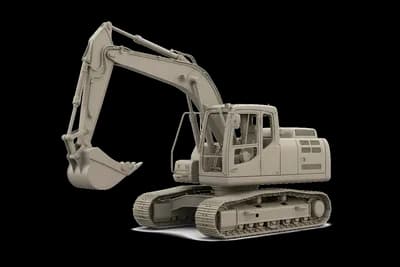
Most equipment overspend on a project is decided before work starts, in the planning phase. A phase-by-phase checklist keeps the right machines on site and the wrong ones off the books.
The cheapest way to control equipment cost on a construction project is to plan it by phase before mobilisation, tie each machine to the dates it is genuinely needed, and decide rent versus own per category rather than as a blanket policy. Equipment that arrives early or lingers after its phase is pure idle cost. The checklist below walks through the four main phases, the machines to plan for each, and a rent-versus-own note. Treat it as a starting structure and adjust to your site, ground conditions and programme.
1. Earthworks and site preparation
This phase moves the most material and sets the schedule for everything after it. Plan for excavators sized to the dig, dozers and graders for bulk movement and levelling, articulated dump trucks or site dumpers for haulage, and compaction plant for fill. Add dewatering pumps and lighting towers where conditions demand.
Rent versus own: most earthmoving plant is used hard for one phase then sits idle, so renting for the duration usually beats owning. Get the machine size right first, because an oversized excavator wastes money and an undersized one wastes time — our excavator size guide helps match the machine to the dig.
2. Foundations and substructure
Once the ground is ready, foundations need different plant. Plan for piling rigs where deep foundations apply, smaller excavators for trenching and footings, concrete pumps and mixers, and continued dewatering. Compaction returns for backfill around foundations.
Rent versus own: piling rigs and concrete pumps are specialised and intermittent, so they are almost always rented, often with operator. Trenching excavators may already be on site from earthworks if the programme overlaps, which is a reason to phase the hire dates carefully rather than book each phase in isolation.
3. Structure and lifting
As the build rises, lifting dominates. Plan for the primary crane — tower, crawler or mobile depending on height, reach and duration — plus telehandlers for material distribution, and mobile elevating work platforms for steel and cladding. Generators and welding plant support the structural trades.
Rent versus own: cranes are the highest-value decision on most sites. A long, tall build may justify a tower crane hired for the programme; shorter or lower-rise work often suits a mobile or crawler crane brought in for specific lifts. The choice between machine types matters as much as the access model, and the duration drives the rent-versus-own maths. Telehandlers are versatile enough that contractors who run them across many projects sometimes own them, while single-project needs rent.
4. Access, services and finishing
The final phase is access-heavy and varied. Plan for scissor lifts and boom lifts for internal and external finishing, smaller generators and compressors, lighting, and small tools and compaction for external works and landscaping. Welfare and site accommodation belong here too.
Rent versus own: access equipment is the textbook rental category — intermittent use, wide variety of machines needed for short windows, and a strong safety and certification reason to use well-maintained current fleet. Owning a single scissor lift rarely pays unless your work is access-led every week.
Putting the plan together
| Phase | Core equipment | Typical default |
|---|---|---|
| Earthworks | Excavators, dozers, dumpers, compaction | Rent for the phase |
| Foundations | Piling rigs, concrete pumps, trenching | Rent, often with operator |
| Structure | Crane, telehandlers, MEWPs, generators | Rent crane; own telehandler if reused |
| Access/finishing | Scissor and boom lifts, small plant | Rent |
The pattern is clear: most site equipment is phase-specific and suits rental, while a handful of constantly used machines can justify ownership. The decision turns on utilisation across your whole project pipeline, not one job. Read how to rent, lease or finance equipment for the framework, then run the figures for any high-value machine in the rent vs lease vs buy calculator before you commit capital.
The discipline that saves money
Whatever the mix, the saving comes from discipline: tie every machine to a phase and its dates, mobilise it when the work is ready, and release it the moment the phase ends. Plant that turns up early or stays late is the most common and most avoidable equipment overspend on any site.
Frequently asked questions
- How early should equipment be planned on a construction project?
- Plan equipment at the programme stage, before mobilisation, and tie each machine to the phase and dates when it is actually needed. Booking early secures availability and rates, especially for high-demand items like cranes, while phasing the requirement prevents machines arriving before there is work for them and accruing idle cost.
- Which construction equipment is usually better to rent than own?
- Anything used for a single phase or intermittently — most earthmoving plant, access equipment, compaction, dewatering pumps and lighting towers — is usually cheaper to rent for the project than to own. Machines you run continuously across many projects can justify ownership. The break-even depends on utilisation, so check it per machine rather than assuming.
- What is the biggest equipment planning mistake on sites?
- Bringing plant to site before the work for it exists, or keeping it after the phase ends. Both convert billable capability into idle cost. Tying each machine to a specific phase and its start and finish dates, then releasing it promptly, is the simplest way to control equipment spend across a project.
Sources & further reading
About the author
Equiply Editorial TeamEquipment Finance Editorial Team
The Equiply editorial team covers industrial and maritime equipment access — rental, leasing and financing — for procurement and finance leaders across Europe.
Compare your options on Equiply
Equiply brings rental, leasing and financing for industrial and maritime equipment into one place. Be first to access the marketplace.