Equipment guides
Air Compressor Sizing Guide: CFM and Pressure
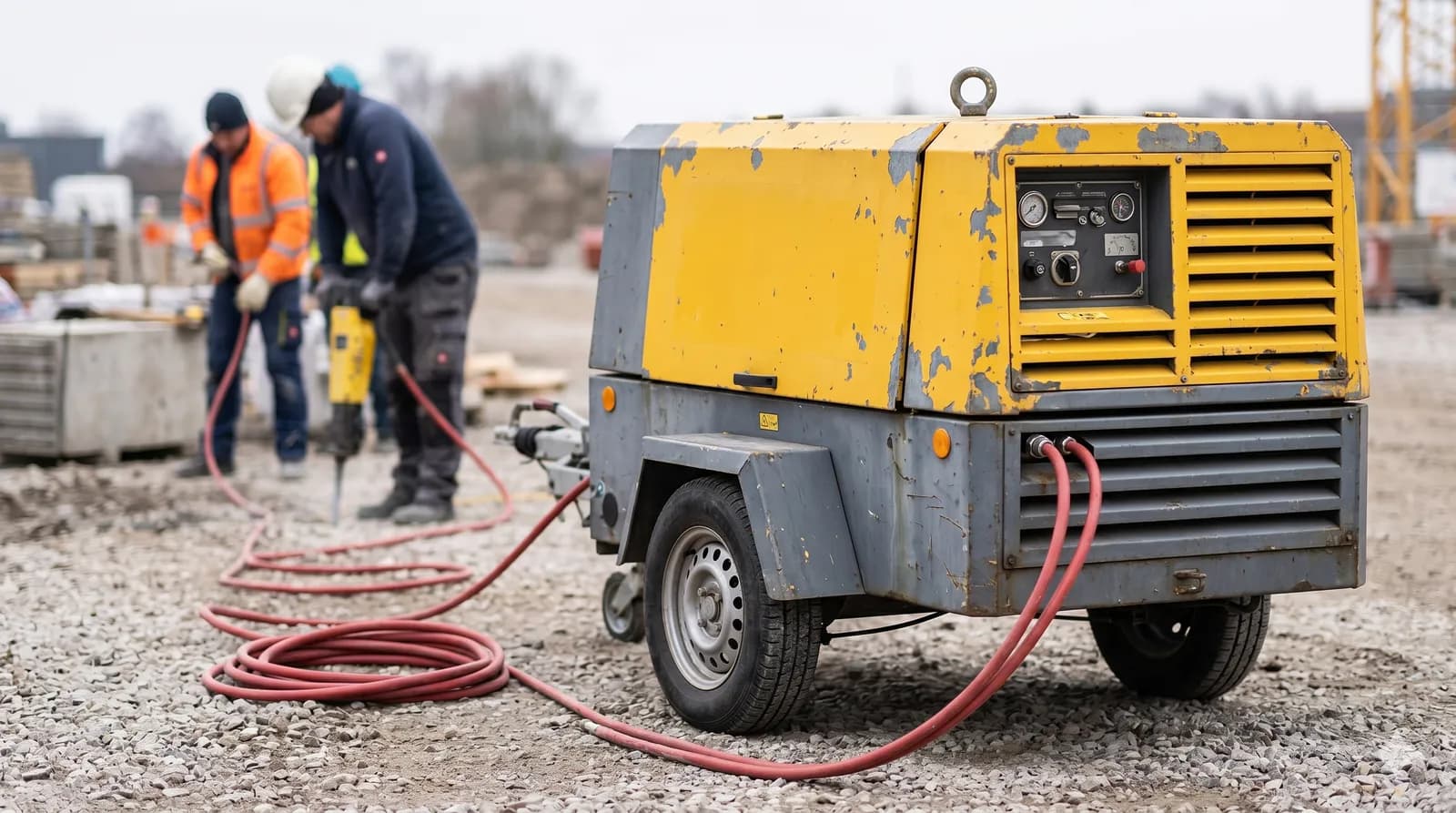
Size a compressor on two numbers: the air flow your tools draw and the pressure they need. Add up simultaneous demand, allow for duty cycle and altitude, then add headroom.
A compressor is sized on two numbers: how much air your tools draw, measured as free air delivery in CFM or litres per second, and the pressure they need, in bar or psi. Get the flow wrong and tools stall under load. Get the pressure wrong and they never reach full power. The calculation is short once you know what runs at the same time.
Start with pressure
Find the highest working pressure any single tool requires. Most pneumatic hand tools want around 6.3 bar (90 psi) at the tool itself. The compressor has to deliver more than that, because pressure drops along hoses, fittings and filters. Size for the most demanding tool on the line and everything below it is covered.
Pressure sets the class of machine. Flow sets the size within that class.
Add up simultaneous air demand
Air consumption is where sizing goes wrong. The figure that matters is not the total of every tool you own — it is the total of the tools running at the same time.
List the tools that will operate together, take each one's air consumption at its rated pressure, and sum them. A tool that runs in short bursts does not draw its full rated flow continuously, so apply a usage factor for intermittent tools rather than assuming everything runs flat out.
| Tool | Typical demand (CFM) | Typical demand (l/s) | Working pressure |
|---|---|---|---|
| Air wrench / impact gun | 4–10 | 2–5 | 6.3 bar |
| Breaker / chipping hammer | 25–40 | 12–19 | 6–7 bar |
| Nail gun | 2–5 | 1–2.5 | 6.3 bar |
| Sandblaster (small) | 25–50 | 12–24 | 6–8 bar |
| Spray gun | 4–12 | 2–6 | 3–4 bar |
| Grinder | 15–25 | 7–12 | 6.3 bar |
Treat these as starting figures. Always use the consumption stamped on the actual tool.
Allow for duty cycle
Duty cycle is how much of the time the compressor runs under load versus idling. A piston compressor rated for intermittent use will overheat if you run it continuously; a screw compressor is built to run loaded for long stretches. Match the machine type to how hard and how long the work pushes it, not just to the peak flow figure.
Adjust for altitude
Air thins as you climb, so effective output falls the higher the site sits. As a rough guide, allow for a few percent of lost output per 300 metres above sea level. On a high-altitude job, size up to compensate, otherwise the tools starve under load.
Worked example
A crew runs two air wrenches and one grinder together on a flat coastal site.
- Air wrenches: 2 × 8 CFM = 16 CFM
- Grinder: 1 × 20 CFM = 20 CFM
- Simultaneous total: 36 CFM
- Add 25% headroom: 36 × 1.25 = 45 CFM
- Highest pressure required: 6.3 bar
So the job needs a compressor delivering at least 45 CFM at 7 bar (rounding pressure up for hose losses). Pick the next standard rating above that, and confirm the duty cycle suits continuous wrench-and-grind work.
The sizing in short
- Set pressure to the highest-pressure tool, plus a margin for losses.
- Add the air demand of tools that run at the same time.
- Apply a usage factor for intermittent tools.
- Add 20–30% headroom.
- Adjust up for altitude and check the duty cycle.
Match the machine to the job
Compressors, like generators, often suit a job better as a rental than a permanent purchase, because demand swings with the work in front of you. Bring in the exact CFM and pressure each job needs rather than owning one compromise unit. To weigh renting against leasing or buying for your own numbers, use the rent vs lease vs buy calculator.
Frequently asked questions
- How do I work out the CFM I need?
- List every tool that will run at the same time, take each tool's air consumption in CFM or l/s at its rated pressure, and add them up. Apply a usage factor if tools run intermittently rather than continuously, then add 20-30% headroom. The total is the minimum free air delivery your compressor must supply at the required pressure.
- What pressure should my compressor deliver?
- Match the highest pressure any single tool requires, usually quoted in bar or psi. Most pneumatic hand tools run at around 6.3 bar (90 psi) at the tool, but pressure drops along the hose, so the compressor must deliver a little above that. Sizing for the highest-pressure tool keeps every tool on the line working.
- Does altitude affect compressor performance?
- Yes. Air is thinner at altitude, so a compressor delivers less effective output the higher you work. As a rough guide, output falls by a few percent per 300 metres above sea level. On high-altitude sites you size up to compensate, or the tools starve for air under load.
Sources & further reading
About the author
Equiply Editorial TeamEquipment Finance Editorial Team
The Equiply editorial team covers industrial and maritime equipment access — rental, leasing and financing — for procurement and finance leaders across Europe.
Compare your options on Equiply
Equiply brings rental, leasing and financing for industrial and maritime equipment into one place. Be first to access the marketplace.