Equipment guides
Equipment Pre-Hire Inspection Checklist
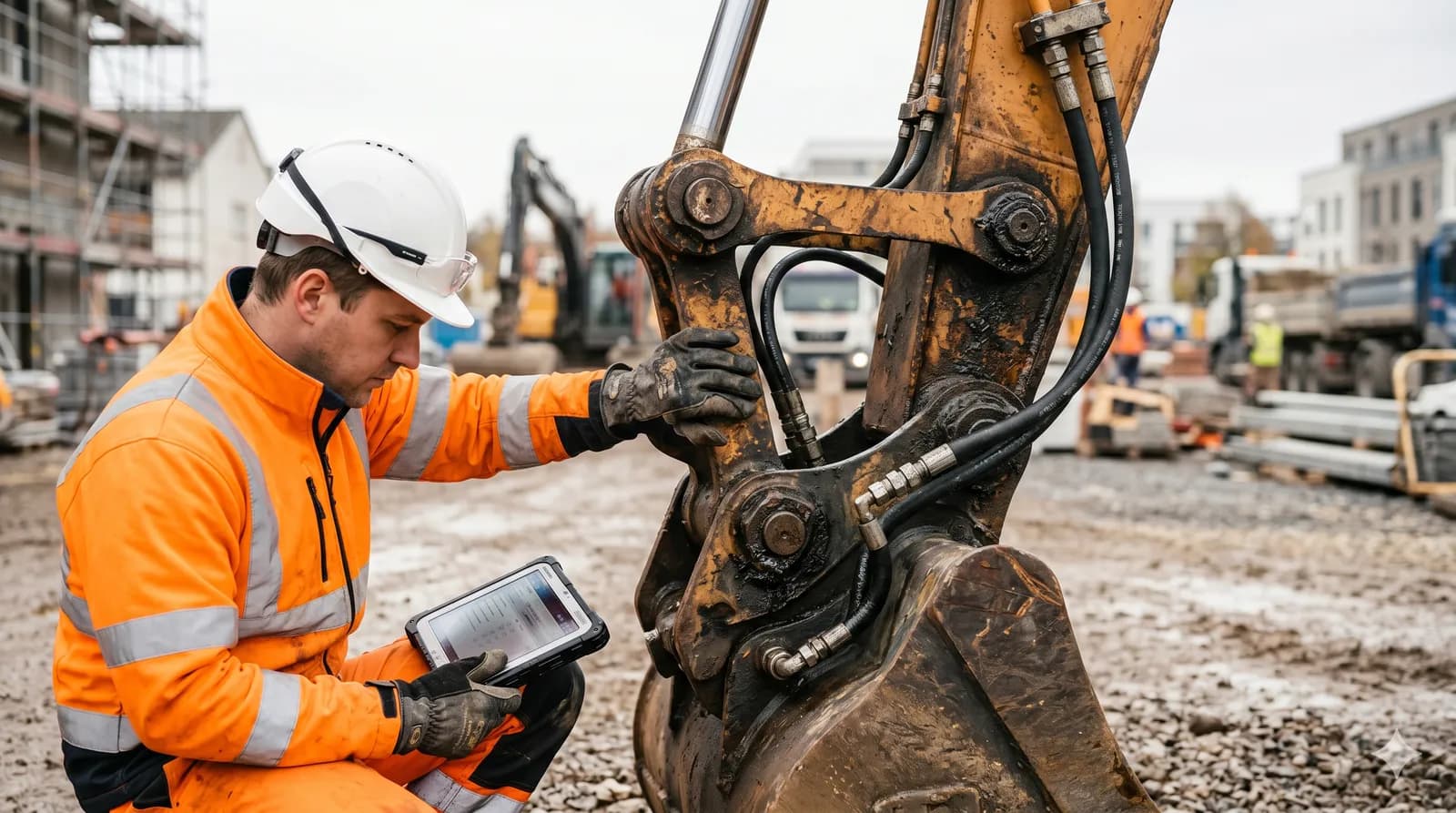
Before you sign for a hired machine, work through this checklist: documents, hours, fluids, tyres, safety devices, controls, attachments and a photographed damage record.
The fastest way to lose money on a rental is to sign for it without looking. Accept a machine with worn tracks, a failed safety cut-out or undocumented damage and you inherit the cost, the downtime and the argument at off-hire. A ten-minute handover inspection protects you on all three. Work through this checklist before you sign, and record what you find. If reliability on site is the wider goal, pair this with how to reduce equipment downtime.
1. Documentation and certificates
Check the paperwork before you touch the machine. You want the hire agreement, the operator manual, and any current statutory inspection or test certificate the machine type requires, such as a thorough examination for lifting or access equipment. Confirm dates are valid for the whole hire period. A missing or expired certificate means the machine is not fit to put to work, whatever the yard says.
2. Hours and general condition
Read the hour meter and note it against the agreement; this is your baseline for usage charges and for spotting a tired machine. Walk the whole machine and look at the general state of it: structural cracks, bent guards, worn pins and bushes, missing covers. A well-kept machine is more likely to last the hire without failing. Record the hour reading with a photo.
3. Fluids and leaks
Check oil, coolant, hydraulic fluid and fuel levels, and look under the machine and around hoses and rams for fresh leaks. A wet patch on the ground or a weeping hydraulic fitting is an early sign of a fault that will stop the job. Catching it at handover means the supplier fixes or swaps the machine, not you mid-shift.
4. Tyres or tracks
Inspect tyres for tread depth, cuts, bulges and correct pressure, or check tracks for tension, missing pads and worn sprockets. Running gear is expensive and wears in service, so an honest record at handover stops a dispute over wear you did not cause. Note anything marginal in writing and photograph it.
5. Safety devices
Test the safety systems before any real work: seatbelt and presence sensor, horn, lights and beacon, mirrors and cameras, emergency stop, overload or tilt warnings, and any interlocks. On platforms and lifting gear, confirm limit switches and load indicators work. A machine with a dead safety device must not go into service until it is fixed.
6. Controls function test
Start the machine and run every control through its range with no load: travel, steering, brakes, lift, lower, slew, tilt and any auxiliary functions. Listen for unusual noise and watch for slow or jerky movement. This catches faults that a static look misses and proves the machine works as it should before you commit to it on the job.
7. Attachments and ancillaries
If the hire includes attachments, check each one fits the coupler, locks home securely, and matches the machine's hydraulic flow and pressure where powered. Confirm you have the right buckets, forks or tools for the work, plus any chains, slings or accessories listed on the agreement. Missing or mismatched attachments are a common cause of lost time on day one.
8. Damage record and photos
Make a written and photographic record of the machine's condition at handover before you sign. Photograph each side, the hour meter, the data plates and every existing mark, scratch or dent, with a time stamp. This is your single best defence against being charged for pre-existing damage at off-hire. Have the delivery driver or yard sign the record where possible.
9. Operator manual and familiarisation
Confirm the operator manual is with the machine and that whoever runs it has read the relevant sections and is competent on that model. Familiarisation on the specific machine, not just the category, prevents misuse, breakdowns and accidents in the first hours. Note any controls or features that differ from machines your team already knows.
How to access equipment with less risk
A clean handover starts with a supplier who maintains and documents their fleet, so weigh service and condition alongside the day rate when you book. For short jobs and peaks, renting keeps you flexible and shifts maintenance to the supplier; for machines you run constantly, owning or financing may cost less per hour but moves the inspection and upkeep burden onto you. To see which model fits your usage and budget, compare the options first with the rent vs lease vs buy guide and run your numbers through the rent vs lease vs buy calculator.
Frequently asked questions
- Who is responsible for checking a machine at handover?
- The hirer should inspect the machine on delivery and record its condition before signing. Once you accept it, you generally take on responsibility for damage and for stopping work if a safety device fails. A documented handover protects both you and the supplier.
- What should I photograph before accepting a rental machine?
- Photograph the whole machine from each side, plus any existing damage, the hour meter reading, tyre or track condition, and the data and inspection plates. Time-stamped photos settle disputes over pre-existing damage and confirm the hours the machine arrived on.
- What documents should come with a hired machine?
- Expect the hire agreement, a current statutory inspection or test certificate where one is required, the operator manual, and any certificate for lifting or access equipment. If a required certificate is missing or out of date, do not put the machine into service.
Sources & further reading
About the author
Equiply Editorial TeamEquipment Finance Editorial Team
The Equiply editorial team covers industrial and maritime equipment access — rental, leasing and financing — for procurement and finance leaders across Europe.
Compare your options on Equiply
Equiply brings rental, leasing and financing for industrial and maritime equipment into one place. Be first to access the marketplace.