Equipment guides
Excavator Attachments and What They Do
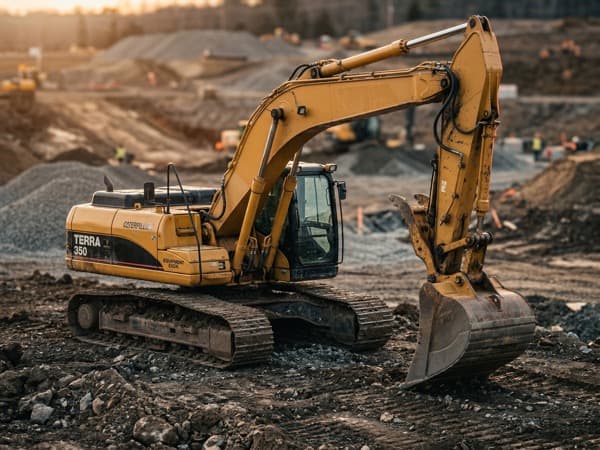
One excavator can dig, break, drill, grade, sort and crush once you fit the right attachment. Here is what each tool does and when to put it on.
An excavator is only as versatile as the tool on the end of its arm. The same base machine can dig a trench in the morning, break out a slab after lunch and sort waste before close, provided you fit the right attachment and your hydraulics can drive it. Buying every tool rarely pays off, so most operators hire by task. This guide runs through the common attachments and what each one does. To match attachment to machine, start with the excavator size guide.
1. Buckets (digging and grading)
Buckets are the default tool. A narrow toothed digging bucket cuts into ground for trenches, foundations and footings, with the teeth concentrating force to break hard soil. A wide, smooth grading or ditching bucket has no teeth and a clean edge for levelling, slope finishing, backfilling and final clean-up. Most jobs need both. Bucket width and capacity must suit the machine's weight class so it can carry a full load without losing stability.
2. Breaker or hydraulic hammer
A hydraulic breaker is a percussion tool that drives a chisel point to smash rock, concrete, road surfaces and foundations. It is the go-to for demolition and any dig that hits material a bucket cannot move. Breakers draw a lot of hydraulic flow, so the carrier needs the right auxiliary circuit. Match breaker size to the machine and the material; an undersized hammer is slow and an oversized one stresses the arm.
3. Auger
An auger is a powered drill bit that bores clean vertical holes for fence posts, sign foundations, piling and tree planting. Swap the bit diameter to change hole size, and use a rock auger or extension for hard ground and deeper holes. It saves a lot of hand digging where you need many holes to a set depth. The auger motor needs matched hydraulic flow to turn at the right torque.
4. Grapple
A grapple has hydraulic jaws that grip and sort irregular loads a bucket cannot hold: demolition debris, scrap, rock, logs and pipes. It turns the excavator into a sorting and loading tool, which is useful on demolition and recycling sites and in land clearing. Rotating grapples add a full turn so the operator can place material precisely. Capacity and jaw opening should suit the material you handle most.
5. Ripper
A ripper is a single heavy tine that tears into ground a bucket cannot penetrate: compacted soil, frozen ground, shale and soft rock. It breaks material up so a bucket can then lift it, which is faster and cheaper than breaking on hard digs. Rippers are simple and durable with no hydraulic feed of their own. Use one to loosen ground first, then switch to a bucket to clear it.
6. Compactor plate
A compactor plate is a hydraulic vibrating plate that compacts soil and backfill in trenches and against structures, exactly where a ride-on roller cannot reach. It firms up the base for pipes, foundations and retaining work and reduces later settlement. Because it mounts on the excavator arm, one operator can excavate, backfill and compact without bringing in a separate compaction crew. It needs the carrier's auxiliary hydraulics.
7. Tiltrotator
A tiltrotator fits between the arm and the attachment and lets the tool tilt side to side and rotate a full circle. The operator can grade a slope, dig at an angle or reposition a grapple without tracking the machine, which cuts repositioning time sharply. It is widely used across Europe for the productivity gain. It does add cost and hydraulic complexity, so it earns its keep most on grading and precision work.
8. Shear
A hydraulic shear has powerful jaws that cut and crush steel, rebar, beams and pipe in demolition and scrap processing. It lets one machine bring a structure down and cut the steel to size for removal, without torch work or a separate crew. Shears are heavy and demand high hydraulic pressure, so they suit larger excavators. Match the shear's rated jaw force to the material you intend to cut.
How to access excavator attachments
Buy the attachments you use almost every day and hire the rest by job. Breakers, augers, shears and tiltrotators are often needed only for specific phases, so renting them with or alongside the machine avoids tying up cash in tools that sit idle. Whichever way you go, confirm the coupler type and the auxiliary hydraulic flow and pressure before the attachment arrives. To compare the cost of owning against hiring for your real usage, run the figures through the rent vs lease vs buy calculator.
Frequently asked questions
- What is the most useful excavator attachment to hire first?
- Most jobs start with buckets: a toothed digging bucket for trenching and a wider grading bucket for levelling and clean-up. Add a hydraulic breaker if there is rock or concrete to remove. Beyond that, hire attachments by task rather than buying a full set.
- Do all attachments fit any excavator?
- No. Attachments are sized to a machine's weight class and need the right coupler and, for powered tools, the correct auxiliary hydraulic flow and pressure. Always match the attachment to the excavator's class and hydraulics before booking, and confirm the coupler type.
- What does a tiltrotator do?
- A tiltrotator sits between the arm and the attachment and lets the tool tilt and rotate a full circle. That means an operator can grade slopes, dig at angles and reposition without moving the machine, which raises productivity and is especially common on European job sites.
Sources & further reading
About the author
Equiply Editorial TeamEquipment Finance Editorial Team
The Equiply editorial team covers industrial and maritime equipment access — rental, leasing and financing — for procurement and finance leaders across Europe.
Compare your options on Equiply
Equiply brings rental, leasing and financing for industrial and maritime equipment into one place. Be first to access the marketplace.